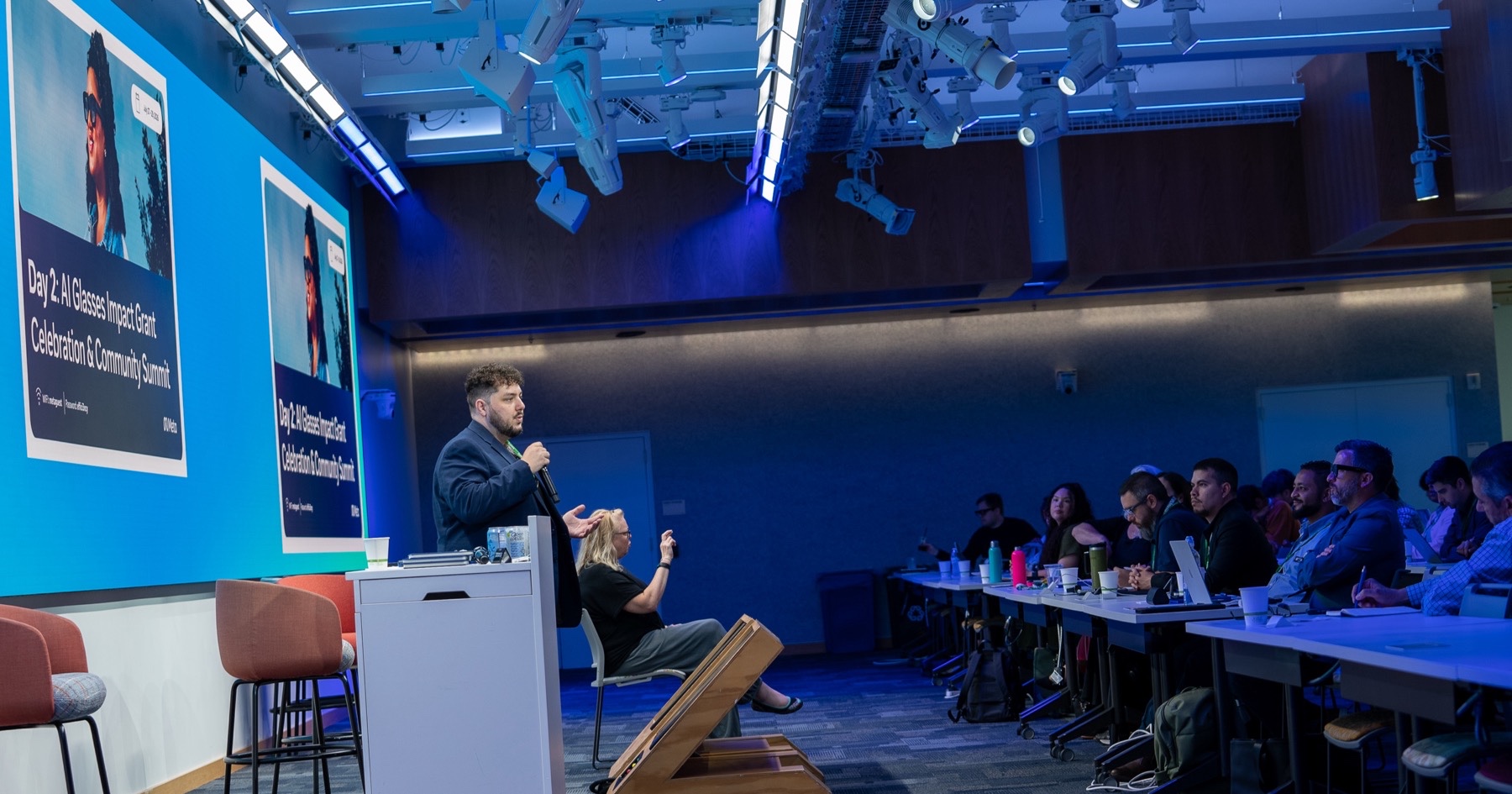
Trust Carbon Infrastructure has been selected as a recipient of an AI Glasses Impact Grant from Meta, joining a cohort of 30 organizations across the United States using AI glasses to drive social and economic impact in their communities. The grant funds a 12-month pilot in California in which community verifiers — the farmers and residents who already walk the land every day — wear Ray-Ban Meta glasses to capture forest verification data hands-free, so the verification work, and the income it pays, stays local.
Key Takeaways
- Selected by Meta. Trust Carbon is one of 30 organizations across 18 US states chosen from nearly 500 applications for the AI Glasses Impact Grant, a program that put nearly $2 million behind wearable technology for good.
- An Accelerator recipient. Trust Carbon received an Accelerator Grant — the tier awarded to organizations already scaling proven impact with AI glasses, not to concepts on a slide.
- Hands-free, already built. Trust Carbon's Ray-Ban Meta integration, Exploratory Mode, is working software on production hardware: gestures capture photos and video, voice guidance confirms each action, and sessions run for hours.
- The income stays local. The California pilot trains community verifiers so verification fees flow to the people who care for the land, instead of to external audit firms flying in.
- Responsible by design. The glasses capture environmental data, not people — no facial recognition, no continuous recording, and a clear signal to anyone nearby when a capture is happening.
Why this recognition matters: Meta did not fund a demo. It funded a deployment. The AI Glasses Impact Grant backs organizations that can put wearable technology to work in the real world — and Meta's read of Trust Carbon is that hands-free verification is one of the places AI glasses change the economics of an entire industry.
Inside the Meta AI Glasses Impact Grant
Meta launched the AI Glasses Impact Grants in January 2026 to put nearly two million dollars directly behind organizations using AI glasses to solve problems in their communities and industries. The program runs in two tracks: Accelerator Grants for organizations already scaling proven impact with AI glasses, and Catalyst Grants for developers building applications for the glasses through Meta's Device Access Toolkit. Recipients were chosen on demonstrated impact, scalability, and relevance to areas where hands-free technology makes the biggest difference — accessibility, workforce safety, education, agriculture, and economic opportunity.
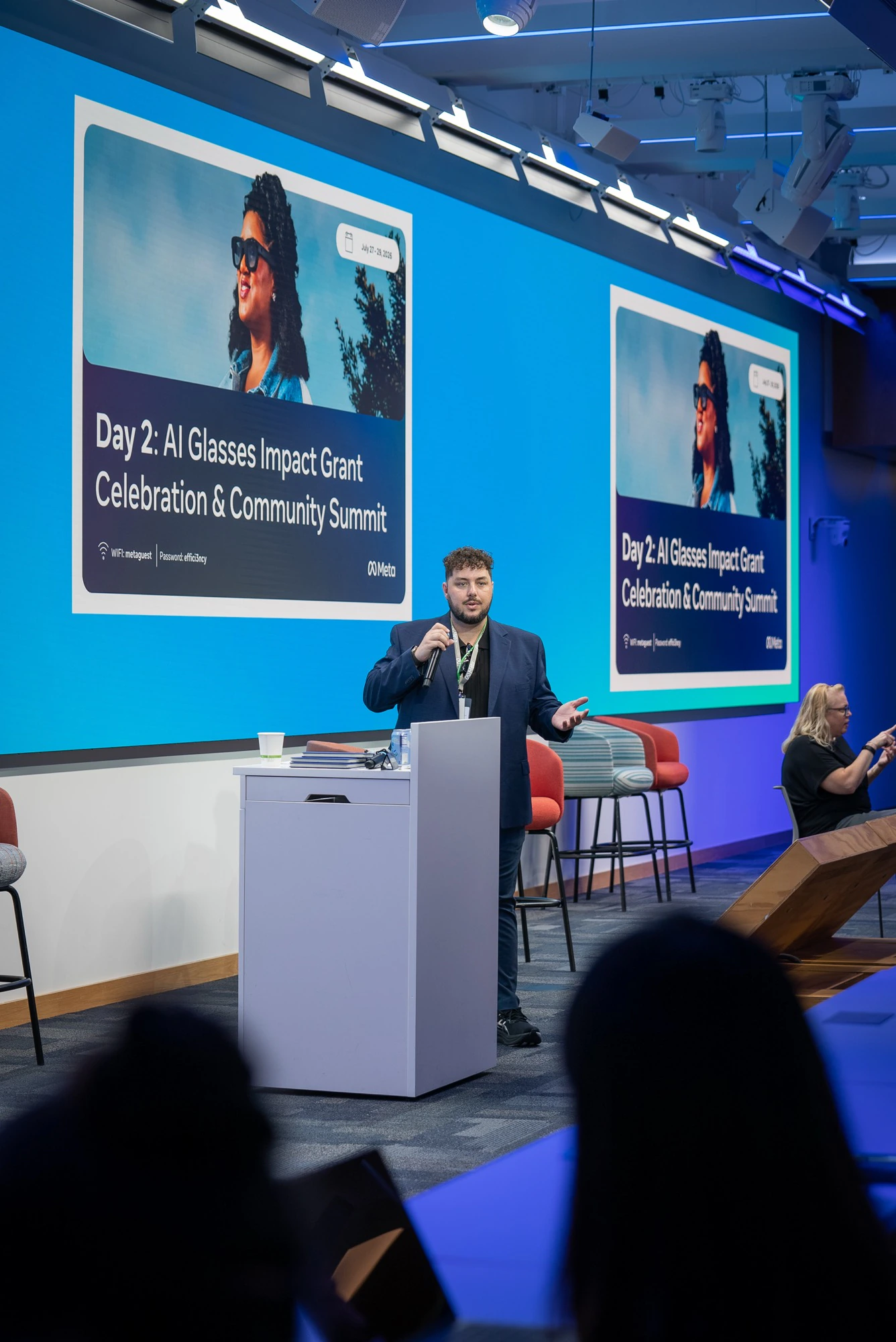
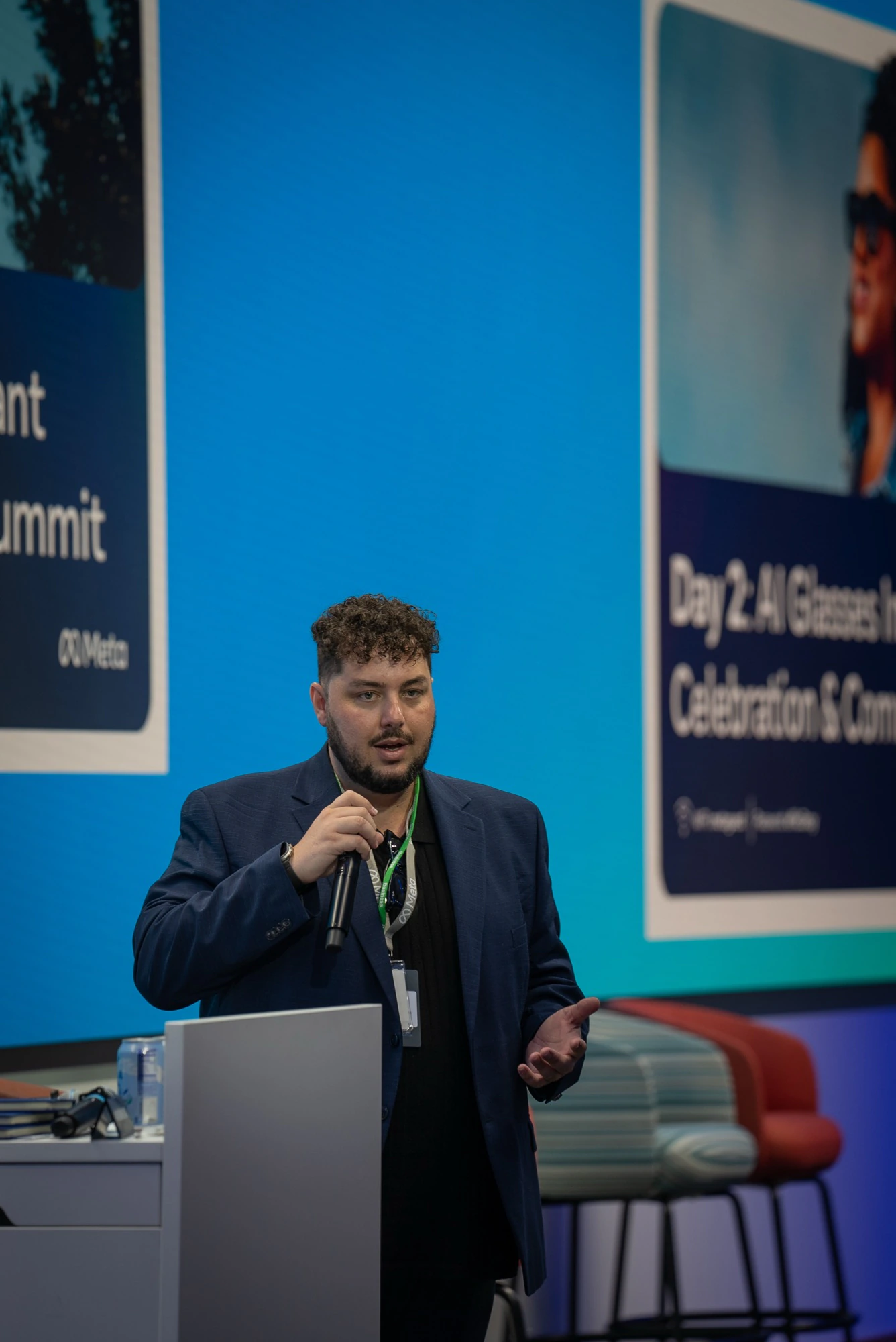
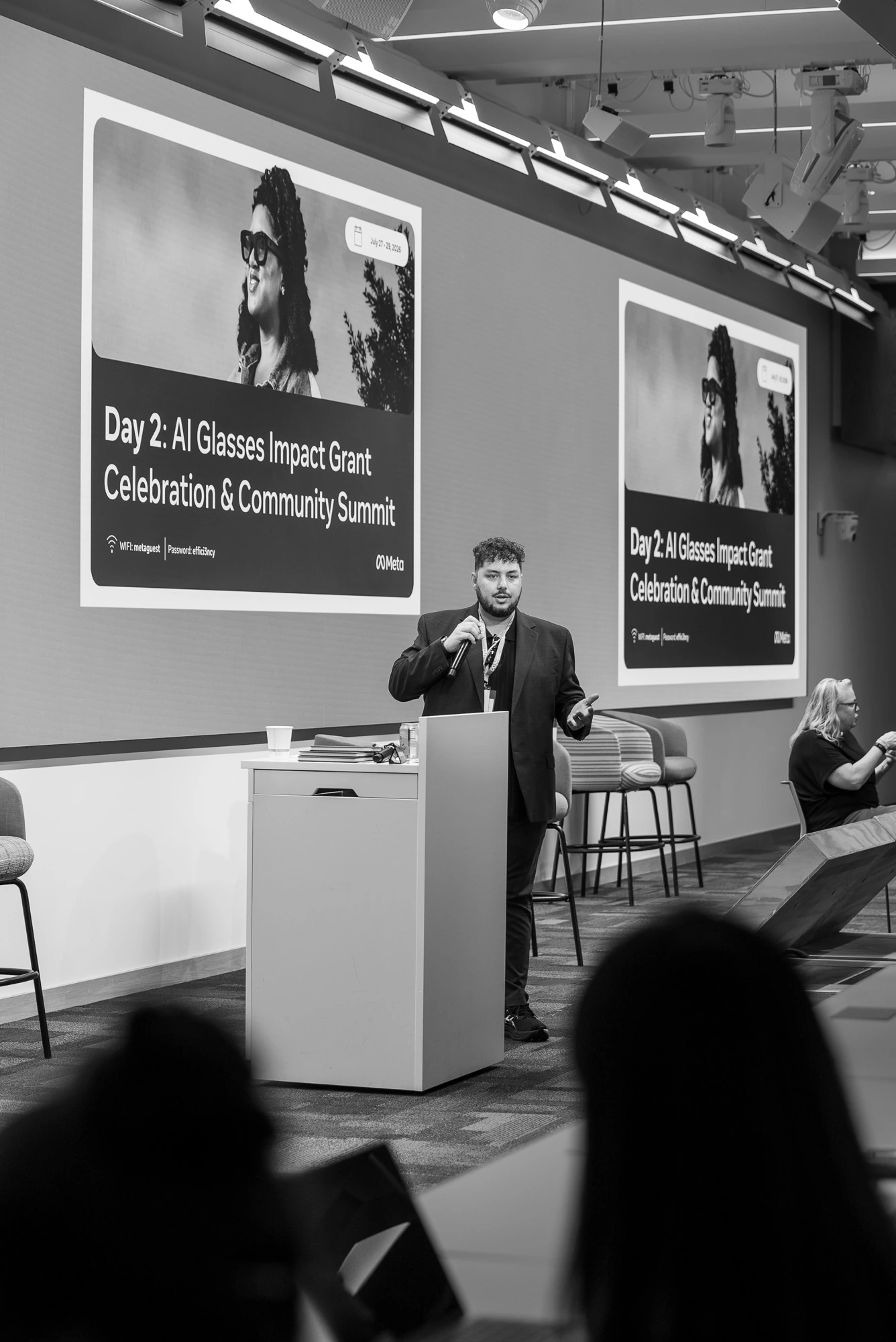
Meta received nearly 500 applications and selected 30 organizations spanning 18 states. The announced cohort ranges from job-training in the construction trades and roadside emergency response, to daily-living support for people with early-stage dementia, to accessibility advocacy from wheelchair users documenting barriers in public spaces. Trust Carbon sits in the group using the glasses for agriculture, conservation, and economic opportunity — bringing verification income to rural communities. Recipients convened in New York City for the AI Glasses Impact Grant Celebration & Community Summit, a three-day gathering to connect, share what they are building, and honor the inaugural class.
Why Trust Carbon: Letting People Walk
Every project that protects a forest or restores degraded land needs someone to go there and confirm what is actually happening on the ground. Today that means sending an auditor who walks slowly, stopping every few meters to pull out a device, take a photo, tag a coordinate, and write a note. A single visit can cost between $5,000 and $50,000. Small landowners cannot afford it, and the communities who live on that land watch environmental value get created around them without being part of the work.
Trust Carbon already turned any smartphone into a verification instrument that works offline in 17 languages, with anti-fraud protection built in from the moment of capture. But even with a phone, a verifier still has to hold a device, point it, and stop walking. On large forest projects where verifiers walk for hours, that constant start-and-stop rhythm is exhausting and limits how much ground a person can cover.
Ray-Ban Meta glasses remove the last point of friction. The camera sits on the verifier's face, capturing exactly what they see. Their hands are free. Walking is continuous. Trust Carbon built this into the platform as a feature it calls Exploratory Mode, developed on Meta's Wearable Developer Access Toolkit. It is not a mockup — it is working software, tested on production Ray-Ban Meta hardware, that a verifier can use in the field today.
How Hands-Free Verification Works
The experience is deliberately simple, because the people using it are farmers and residents, not engineers. Behind that simplicity, the system does serious scientific work.
The verifier opens the Trust Carbon app, taps "Start Exploration," and puts the phone away. A voice greets them in their language and teaches two gestures. That is the last time they touch a screen.
Pointing one finger up captures a photo of exactly what the verifier is looking at. A peace sign captures a short immersive video. A voice confirms each capture — "photo captured, location recorded" — without breaking stride.
An adaptive connection model pauses gesture analysis and streaming while the verifier is walking, then resumes the instant they slow down — which is exactly when they would want to capture something. Field sessions run for hours, until the battery runs out.
Back on WiFi, everything syncs to Trust Carbon's cloud. AI analyzes imagery for species classification, vegetation health, and biomass, and analyzes ambient audio — bird calls, water, wind — to characterize the ecosystem. Every capture arrives cryptographically sealed.
The California Pilot
The grant funds a focused 12-month pilot in California — chosen for its national parks, redwood forests, diverse terrain, and one of the world's most active carbon markets. Trust Carbon will train a small group of community verifiers, run verification sessions across different ecosystems, and produce an honest case study comparing glasses-based verification with phone-only methods.
The point of the pilot is not only technical. It is economic. When the verifier is a farmer who already walks that forest every day, verification stops being a cost imposed from outside and becomes paid work that stays inside the community. That is the shift Trust Carbon is testing: give people the right tools and the freedom to just walk, and the data gets better while the money stays local.
Anti-Fraud Built Into the Form Factor
A carbon credit is only as credible as the data point it was derived from, and most credits today rest on data that was never cryptographically verified at the point of capture. Wearing the camera on your face turns out to be a quietly powerful defense. A camera fixed to the verifier's face cannot easily be pointed at a pre-recorded image on another screen. GPS coordinates are cross-referenced against the continuous walking motion picked up by the glasses' sensors, making location spoofing far harder. And every photo is SHA-256 hashed at the moment of capture, so it is tamper-evident from the first millisecond.
In other words, Trust Carbon did not have to bolt complicated fraud detection on top of the glasses. The form factor itself makes the data more trustworthy — which is the whole point of a verification layer.
Responsible by Design
Camera-equipped glasses in natural areas raise a fair question, and Trust Carbon answers it in the design. Exploratory Mode captures environmental data, not people. There is no facial recognition and no continuous recording — the camera only activates on a deliberate gesture. Ray-Ban Meta glasses also signal clearly to anyone nearby when a capture is taking place, so there is nothing covert about how the data is collected.
That principle runs deeper than a single feature. Verification exists because people need to trust the data. A tool that produced that data secretly would undermine the very thing it is meant to create. Building the glasses experience to be transparent, gesture-triggered, and focused on the land rather than the people on it is not a constraint on the work — it is the work.
A Statement from the Founder
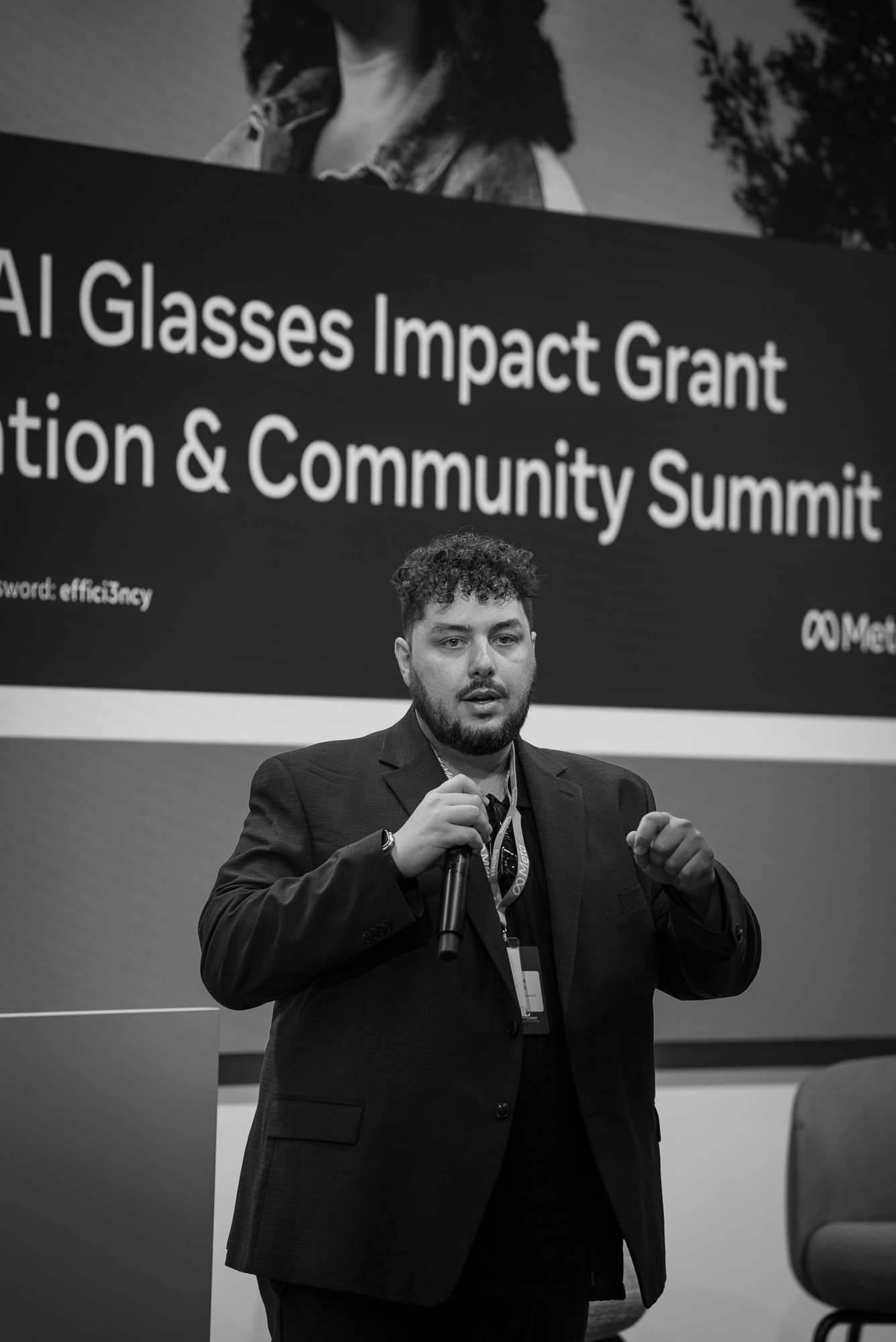
The most valuable thing about this grant is not the funding — it is what Meta chose to back. They looked at a room full of applications and decided that giving a farmer a pair of glasses so she can verify her own forest, and get paid for it, is worth investing in. That is the whole thesis of Trust Carbon in one sentence. Verification should belong to the people who take care of the land. Ray-Ban Meta glasses let us take away the last device between them and the work. We intend to spend this pilot proving that when you give people the right tools and let them just walk, they collect better data than any audit firm — and they enjoy doing it.
A Pattern of Institutional Backing
Meta joins a short list of institutions that have chosen to back Trust Carbon's thesis. In 2025, Trust Carbon was named one of five global winners of the DPI for People and Planet Innovation Challenge, with its $100,000 prize backed by the Bill & Melinda Gates Foundation, Boston Consulting Group and the Japan International Cooperation Agency, selected from 540 startups across 73 countries. In 2026, Trust Carbon was selected for the Halcyon Global Climate Fellowship, one of the most respected impact accelerators in the United States.
The institutions asking the hardest questions about what the voluntary carbon market actually needs keep arriving at the same answer: credible, community-owned verification. A development-finance coalition reached it. A decade-old climate accelerator reached it. And now the company building the hardware people will wear to do the work has reached it too. Trust Carbon is building exactly that layer — and Meta's grant puts the newest, most capable form of that hardware directly into community hands.
See the Infrastructure Behind the Glasses
Exploratory Mode is one surface of a larger system. Visit the Trust Carbon homepage to see how project setup, offline field collection, certification and investor access connect through a single verification infrastructure.
Explore Trust Carbon