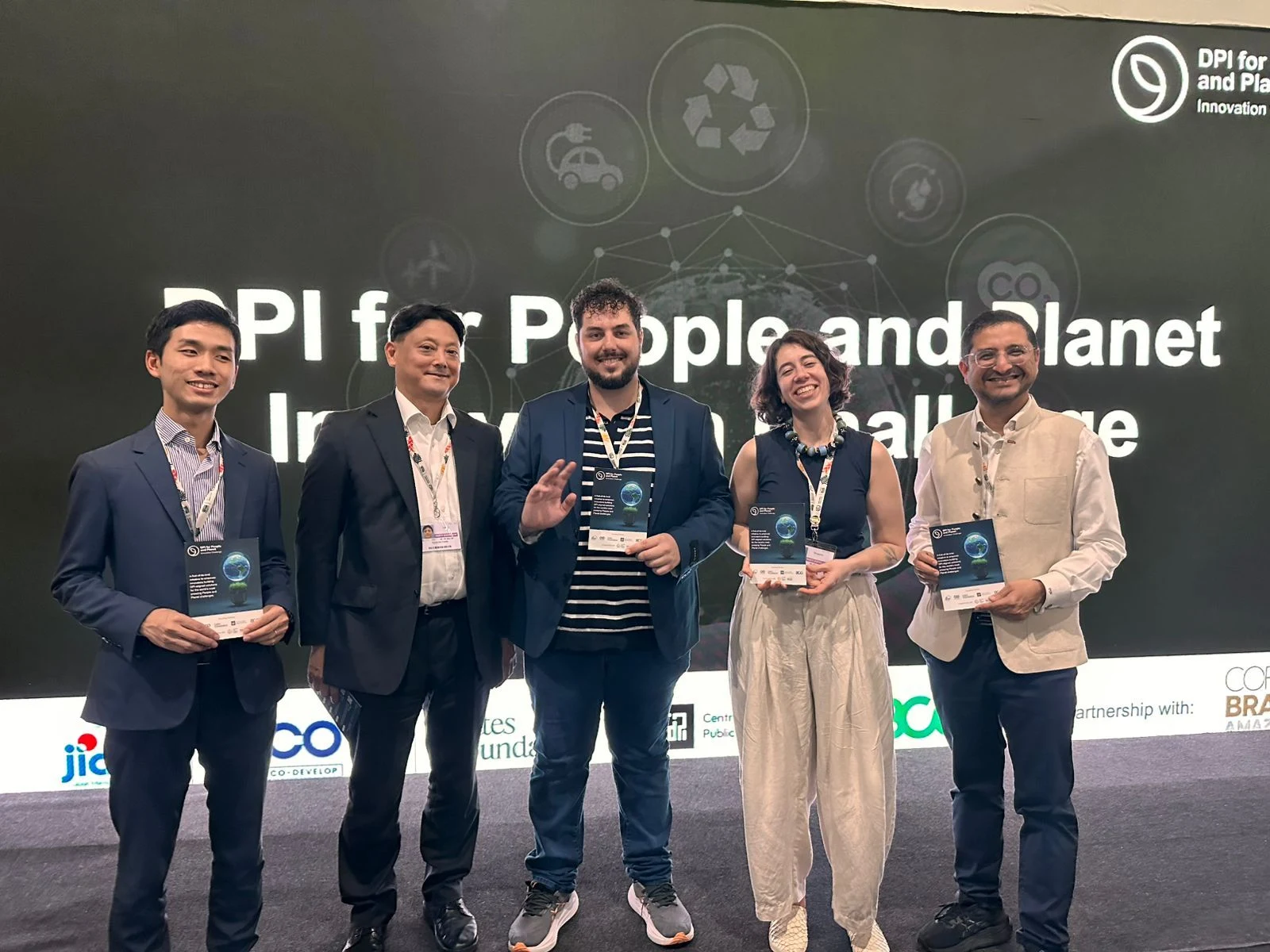
Trust Carbon Infrastructure has been selected as one of five global winners of the DPI for People and Planet Innovation Challenge 2025, chosen from 540 startups across 73 countries. The challenge, operated by the Centre for Digital Public Infrastructure and Co-Develop, is backed by the Bill & Melinda Gates Foundation, the Japan International Cooperation Agency, and the Boston Consulting Group. The prize is US$100,000. Winners were announced and showcased at the Global DPI Summit held during COP30 in Belém, Brazil.
Key Takeaways
- Top 5 out of 540 startups, 73 countries. A selective global cohort that spans climate, health, finance and identity use cases built on Digital Public Infrastructure.
- US$100,000 innovation prize, non-dilutive. Funding designated to accelerate technology development, global expansion and farmer reach.
- Institutional backing from five major partners. Gates Foundation, BCG, JICA, CDPI and Co-Develop jointly recognized Trust Carbon's thesis that DPI can power climate finance.
- Showcased at COP30 in Belém. The award was presented at the Global DPI Summit in the Amazon, underlining the link between Digital Public Infrastructure and climate adaptation.
- Built on Brazil's DPI stack. The platform integrates land registries (CAR), instant payment rails (PIX), and on-device AI verification to democratize access to the voluntary carbon market for smallholder farmers.
Why this recognition matters: the DPI4PP Challenge was explicit about selecting ventures whose technology actually uses Digital Public Infrastructure as the substrate, not ventures that simply ride on top of private APIs. Trust Carbon's architecture answers that brief directly, and the jury of institutional funders validated it.
The Official Recognition
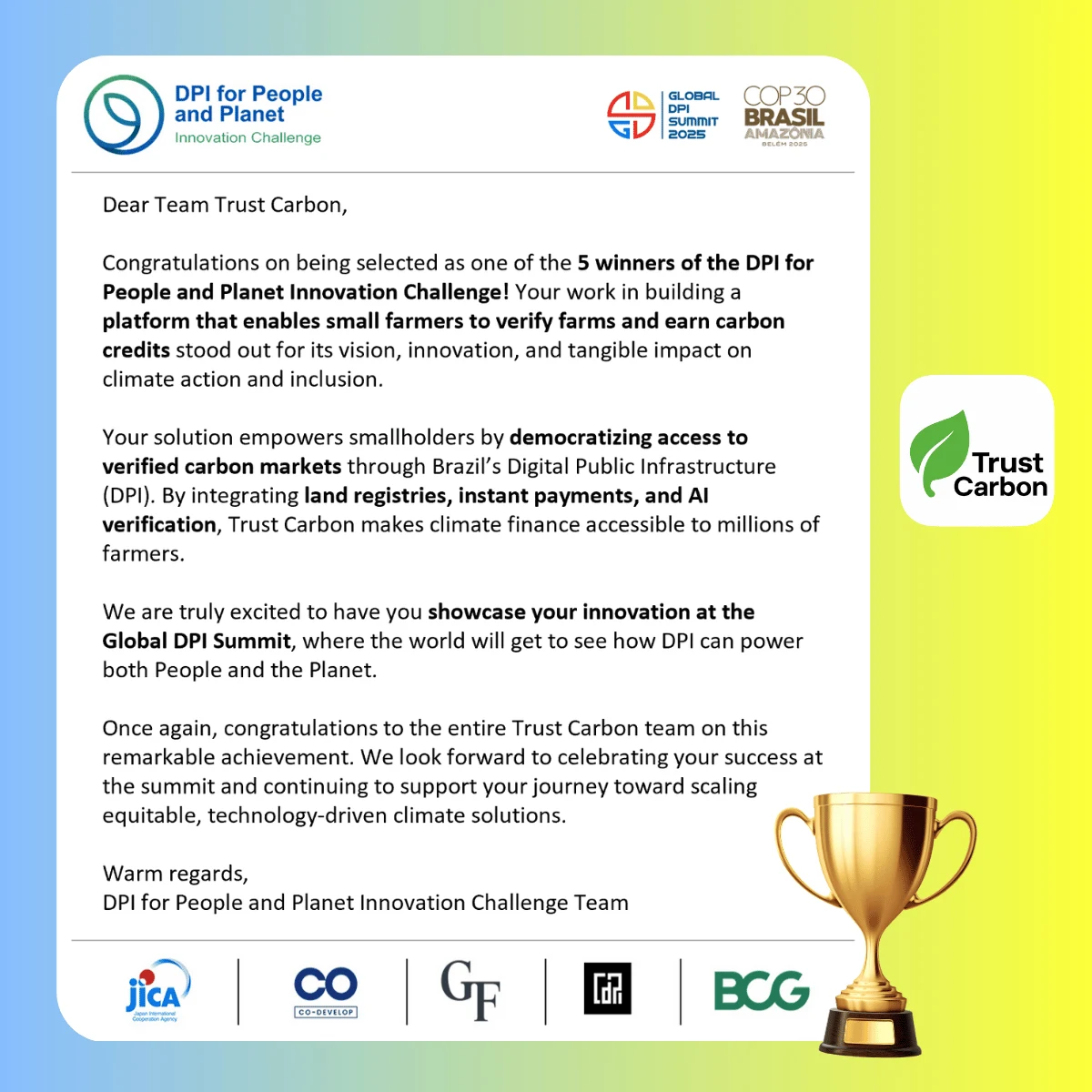
The award letter, issued by the DPI for People and Planet Innovation Challenge team, is reproduced below verbatim:
Official Recognition
Dear Team Trust Carbon, congratulations on being selected as one of the 5 winners of the DPI for People and Planet Innovation Challenge. Your work in building a platform that enables small farmers to verify farms and earn carbon credits stood out for its vision, innovation, and tangible impact on climate action and inclusion.
Your solution empowers smallholders by democratizing access to verified carbon markets through Brazil's Digital Public Infrastructure (DPI). By integrating land registries, instant payments, and AI verification, Trust Carbon makes climate finance accessible to millions of farmers.
We are truly excited to have you showcase your innovation at the Global DPI Summit, where the world will get to see how DPI can power both People and the Planet. Once again, congratulations to the entire Trust Carbon team on this remarkable achievement. We look forward to celebrating your success at the summit and continuing to support your journey toward scaling equitable, technology-driven climate solutions.
About the DPI for People and Planet Innovation Challenge
The DPI for People and Planet Innovation Challenge is the first global competition explicitly designed to back ventures building on top of Digital Public Infrastructure. The program is operated by the Centre for Digital Public Infrastructure (CDPI), a non-profit research institution founded to help countries design DPI that is open, interoperable and inclusive, and by Co-Develop, a financing vehicle that channels capital from governments and foundations into DPI programs across the Global South.
The 2025 edition received applications from 540 startups across 73 countries. Applications were evaluated against a rigorous rubric covering technical innovation, tangible social impact, measurable alignment with DPI principles, and capacity to scale across jurisdictions. Five global winners were selected. Each received a US$100,000 innovation prize and an invitation to present at the Global DPI Summit during COP30 in Belém, Brazil.
The jury coalition behind the 2025 edition was institutional-grade: the Bill & Melinda Gates Foundation, the Japan International Cooperation Agency (JICA), the Boston Consulting Group (BCG), CDPI and Co-Develop. The presence of each of these institutions in the selection process is itself a signal: DPI is no longer a fringe policy conversation, and the organizations that underwrite the world's largest climate and development programs now evaluate DPI-based solutions with the same rigor they apply to every other investment they make.
Why Trust Carbon Was Selected
Trust Carbon Infrastructure builds the verification layer of the voluntary carbon market. The thesis is architectural: a carbon credit is only as credible as the data point from which it was derived, and today most credits are derived from data that was never cryptographically verified at the point of capture. Trust Carbon solves this by turning any smartphone into a scientific data collection instrument, and does so using Brazil's Digital Public Infrastructure as the substrate.
The DPI integration is not branding. It is plumbing. Trust Carbon connects directly to three DPI rails that Brazil has spent the last decade building out:
- Land registries (CAR — Cadastro Ambiental Rural): every project area is validated against the national rural land registry, which means the underlying property is provable, georeferenced, and legally constituted before a single data point is collected.
- Instant payment rails (PIX): when a verified carbon credit clears, payment to the farmer can settle in seconds, direct to a bank or digital wallet, without the friction that traditionally excludes smallholders from the market.
- On-device AI verification: a methodology engine running on the device ensures each parameter collected is physically plausible, cryptographically hashed at capture, and statistically anchored against satellite corroboration before it ever leaves the field.
The official recognition letter explicitly called out this architecture, noting that Trust Carbon "empowers smallholders by democratizing access to verified carbon markets through Brazil's Digital Public Infrastructure". That framing is what the jury selected. It is also, not coincidentally, the framing that lets the same infrastructure replicate into any country building its own DPI stack — India with UPI, Nigeria with BVN, Indonesia with PeduliLindungi — without having to rebuild the verification layer from scratch.
The US$100,000 Prize: What It Unlocks
The prize is non-dilutive. It is designated for accelerating four specific dimensions of the build, each of which compounds with the others:
The prize is not the outcome. The infrastructure is. What the funding enables is the speed at which the infrastructure reaches the farmers, certifiers and buyers who need it — and the rigor with which the technology continues to evolve. Every dollar is already mapped against concrete milestones on the product roadmap.

A Statement from the Founder
This recognition validates our mission to democratize carbon credits for small farmers worldwide. The prize money is not just funding — it's trust from global leaders in our vision. Every dollar will go toward building technology that empowers farmers from 1 hectare to thousands to participate in climate action and earn what they deserve.
The Infrastructure Trust Carbon Builds
Trust Carbon Infrastructure is the integrity layer of the voluntary carbon market. It is not a registry. It is not a certifier. It is not a consultancy. It connects the entire value chain through a single infrastructure, organized around four pillars. Each pillar serves a different audience and covers a different step of the carbon project lifecycle.
Developers create verified project areas, receive AI-powered methodology recommendations tailored to their land type and certification goal, select the best fit, invite their field team and local community, and start collecting in minutes. The entire setup is automated.
Transforms any smartphone into a scientific data collection instrument. Works 100% offline in 17 languages. Advanced AI analyzes each collected parameter in real time, flagging inconsistencies before data ever leaves the field.
Certifiers see all active projects built under their methodologies in one place. They can create new standards, adapt existing ones, and publish them directly into the infrastructure, fully automated, without any manual configuration.
Every verified project is publicly accessible through an immersive, interactive interface. Investors and carbon credit buyers explore real field data and verification records in full transparency, seeing exactly what was collected, where, and when, before committing capital.
The Partners Backing the Challenge
The DPI for People and Planet Innovation Challenge 2025 is the product of a rare institutional coalition. Each partner contributes a different lens to the selection process, and the combination is what makes the recognition load-bearing:
CDPI brings the open-architecture principles — the technical rubric against which every application is evaluated. Co-Develop brings the financing model, designed to channel capital across borders without creating dependency. The Gates Foundation brings a three-decade track record in global health and agricultural development, including the hardest lessons about how technology scales or fails at the edge. JICA brings the public-finance perspective from Japan's bilateral programs across Asia, Africa and Latin America. BCG brings the operational rigor of a global strategy consultancy applied to impact. And the COP30 Brazilian Presidency anchored the 2025 edition in the Amazon — the geography where DPI and climate adaptation intersect most consequentially.
COP30 and the Global DPI Summit
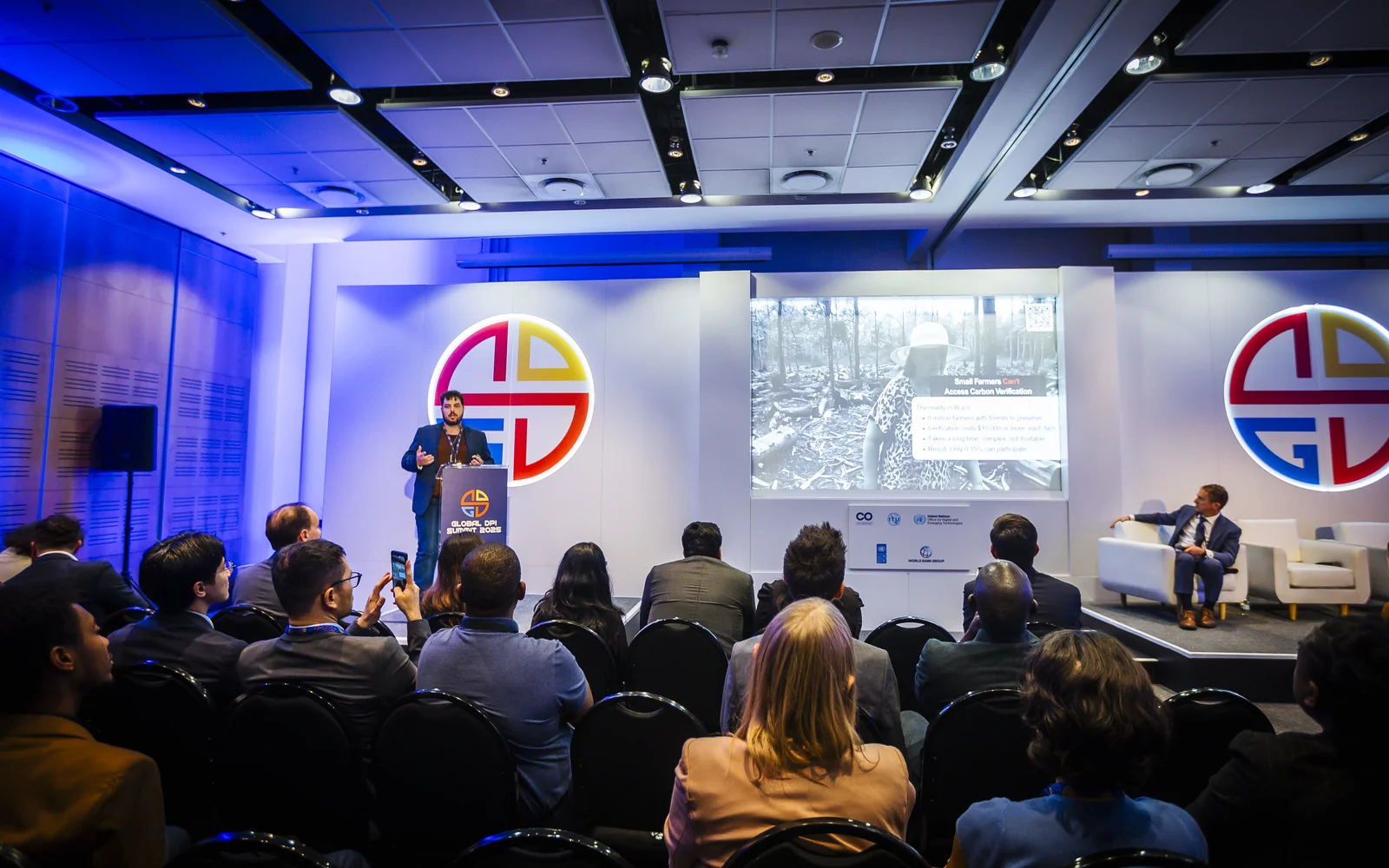
Winning the DPI4PP Challenge is one thing. Being invited to showcase at the Global DPI Summit during COP30 in Belém, in the heart of the Amazon, is a different order of signal. Belém was chosen deliberately. It is the closest major city to the forest itself — the ecosystem whose stewardship the voluntary carbon market was built to finance and which the global climate regime continues to fail, under any credible accounting, to protect.
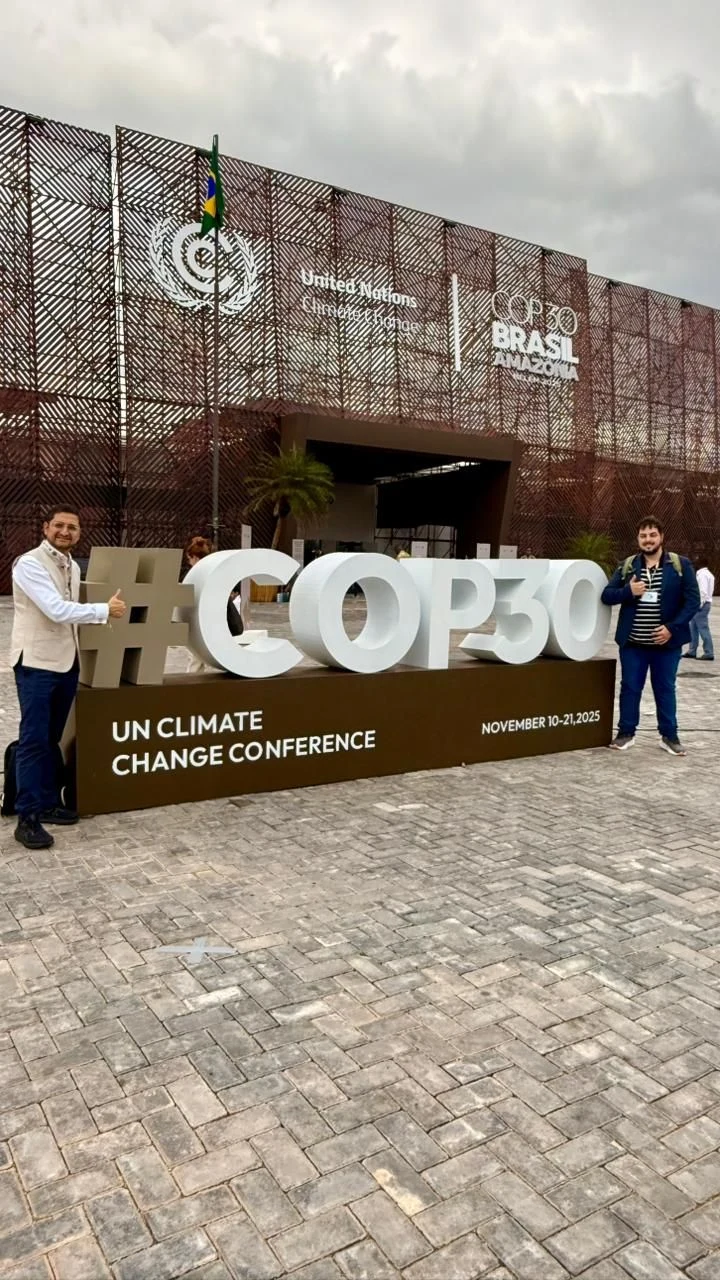
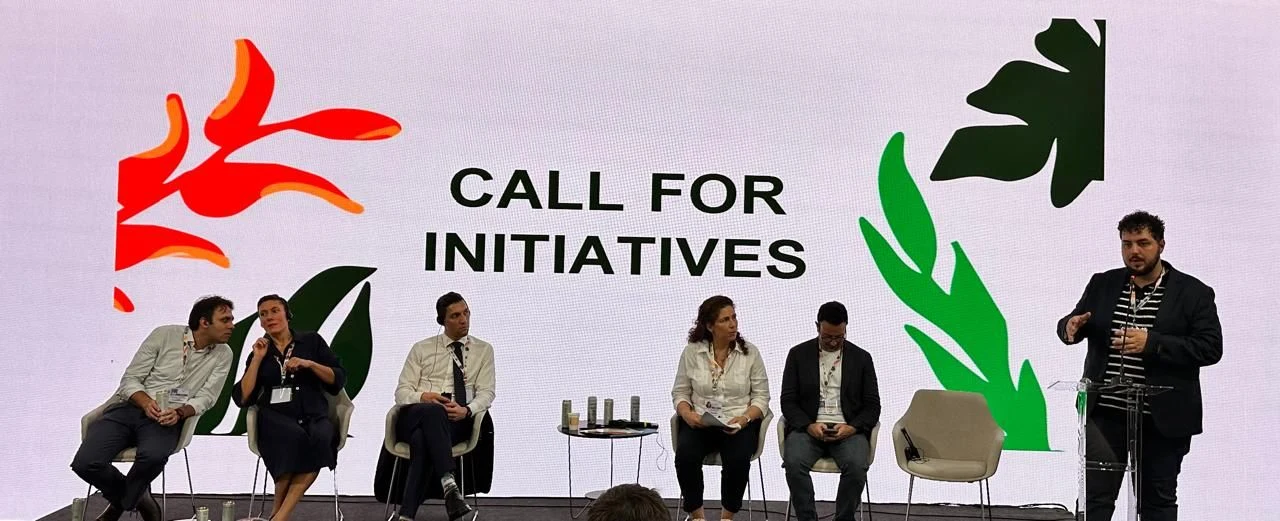
For Trust Carbon the timing is exact. The platform's thesis — that Digital Public Infrastructure is the substrate that makes smallholder carbon finance financeable — was presented to the rooms that decide how development banks, philanthropies and bilateral agencies allocate the next decade of climate capital. Those rooms are, in practice, the buyers of what Trust Carbon is building. Being among the five ventures in front of them, at that moment, in that place, moves the roadmap forward by months that cannot be bought.
A Recognition That Compounds
Institutional recognition of Trust Carbon has continued to accumulate. After the DPI4PP Challenge, the platform was selected for the Halcyon Global Climate Fellowship 2026, the flagship climate cohort of one of the most respected impact-driven accelerators in the United States. The combination — a DPI-anchored infrastructure thesis recognized by both a technology-focused international coalition and a founder-focused U.S. accelerator — is the signal the voluntary carbon market itself has been quietly asking for: the integrity layer the market needs exists, and the institutions responsible for funding the climate transition are now explicitly backing it.
Where to Go Next
This article is a recognition announcement. If you want to see the Trust Carbon Infrastructure platform itself, including the four pillars in more detail, how the methodology engine works, and what is available today for project developers, certifiers, field teams and investors, head to the Trust Carbon homepage.
Learn More About Trust Carbon Infrastructure
Visit the Trust Carbon homepage to see how Project Setup, Field Collection, Certification Bodies and Investor Access connect through one infrastructure built on Digital Public Infrastructure.
Learn More on the Homepage